Dieter Roth @ Rayon Roskar Gallery

PRESS RELEASE

IMG 0701 ld2


Chatham, NY — Rayon Roskar will host Dieter Roth: Early Works, 1954–1965,

a focused exhibition presented by collector, dealer and publisher Matthew Zucker. The show traces the first transformative decade of Roth's career that begins in Switzerland and continues through Iceland and the United States.

Born in Hannover (1930) and sent to Switzerland as a child refugee during World War II, Roth trained in graphic design in Bern before relocating to Copenhagen and later Iceland, where he married and raised three children. He remained tied to Switzerland throughout his life, eventually returning to Basel,

?

where he died in 1998. Displacement and reinvention — geographic, formal, and conceptual — became the engine of his work, propelling him through movements as varied as Concrete art, Op art, Fluxus, Pop Art, early conceptualism, and toward the excess-driven practice of his later "quantity over quality" years coming in the late 1960s and 1970s.


Highlights of the exhibition include:

  • A rare 1954 drawing, the earliest work on view, made in Switzerland during Roth's formal training period.


  • A two-color lithograph (1958), printed in black and yellow in Iceland using paper tape cut to varying widths — an experimental technique originally developed for bookbinding endpapers. Very few sheets are known to survive.


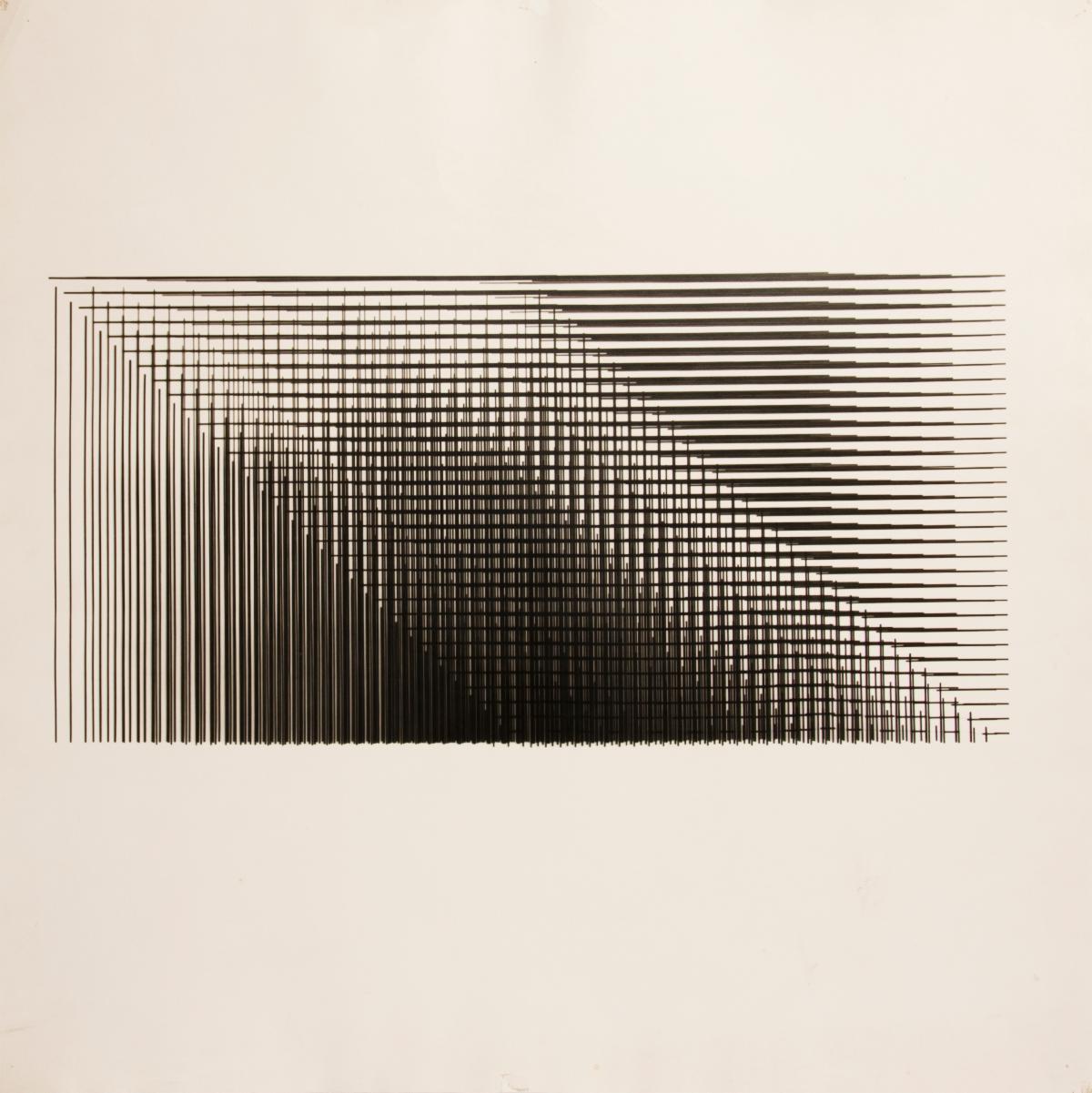
  • A unique photogram(1960) made using thin metal "stantons," the spacers once used in setting text for letterpress printing — a direct link between Roth's design background and his move into pure abstraction.


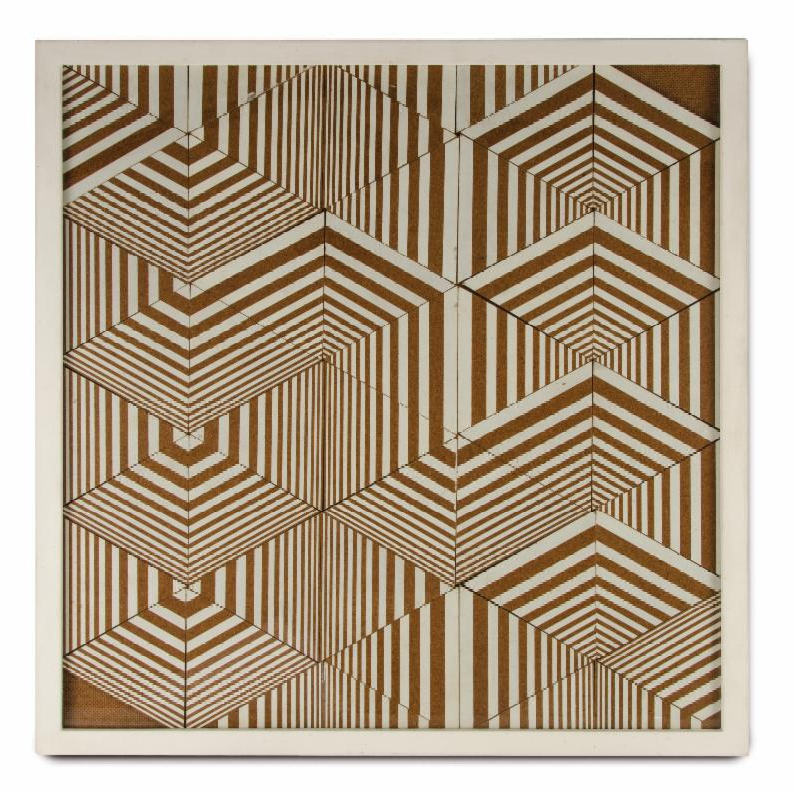
  • Untitled [Puzzle] (1961), an interactive work composed of equilateral triangles cut from parallelograms, each striped according to a calculated formula that produces an optical illusion. The piece extends an idea Roth first developed in 1958, when he began inviting viewers to assemble hand-cut paper elements into compositions of their own making. This work and the photogram on view were last shown together in 2004, in the major Roth retrospective organized jointly by the Schaulager, Basel, and The Museum of Modern Art, New York.


  • A group of collaged postcard works, made from found Icelandic landscape postcards, simply cut in half and taped back together. Created around 1962 in the period after Richard Hamilton and Marcel Duchamp recognized Roth with the Copley Book Award in 1960. These small, deceptively simple works mark Roth's decisive turn toward appropriation and Pop Art strategies.


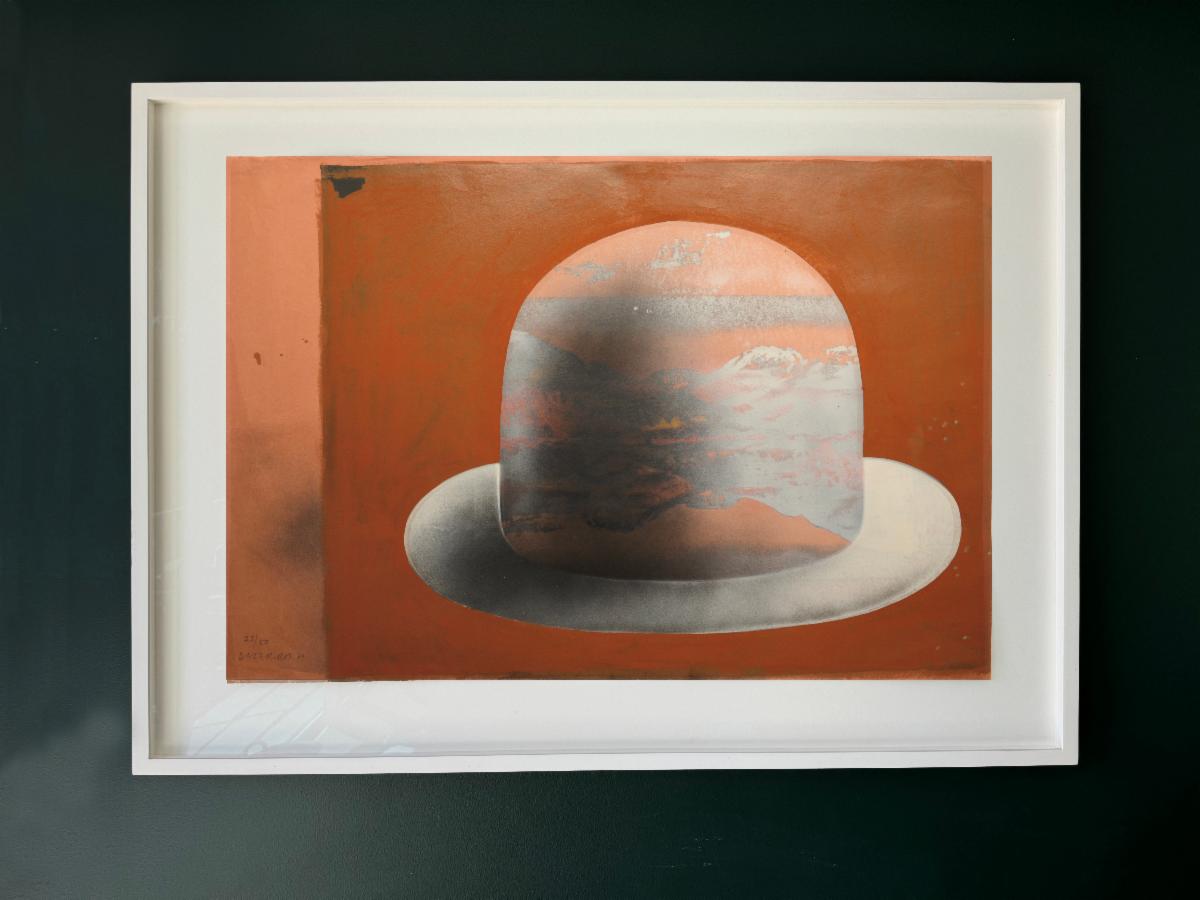
  • Hat (1965), in which Roth enlarged one of his postcard collages tenfold and reproduced it within the silhouette of a bowler hat, spray-painted to complete the image. Fewer than twenty-five examples are known to exist.

Together, these works offer a rare opportunity to see the foundations of one of the most restless and influential artistic minds of the postwar period — before fame, before excess, and before the food sculptures for which Roth later became best known.